
🧠 Clinical Psychology Tools for Therapists & Students
Access 7 powerful clinical psychology tools designed to support therapists, counselors, and psychology students in assessment, diagnosis, and treatment planning.
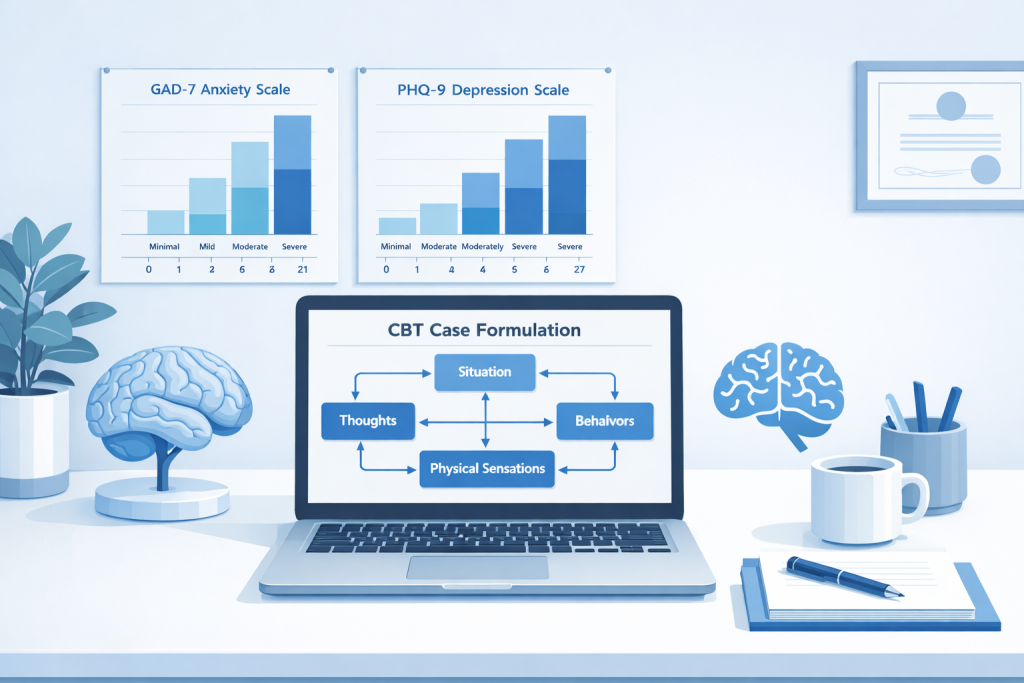
At MindScope Psychology, we provide free, evidence-based tools including CBT case formulation, GAD-7 anxiety assessment, and PHQ-9 depression test to improve clinical accuracy and client outcomes.
🔍 Why Clinical Psychology Tools Matter
Using structured clinical psychology tools helps professionals:
- Improve diagnostic accuracy
- Develop effective treatment plans
- Monitor client progress
- Apply evidence-based therapy techniques
These tools are widely used in clinical practice and research, making them essential for both professionals and students.
📂 Top Clinical Psychology Tools Available
🧩 CBT Case Formulation Tool
The CBT case formulation tool helps therapists understand how thoughts, emotions, and behaviors are connected.
- Identify core beliefs
- Analyze automatic thoughts
- Develop intervention strategies
📊 GAD-7 Anxiety Test
👉 (Free Access)
The GAD-7 is a scientifically validated tool used to measure anxiety severity.
- Quick and reliable assessment
- Instant scoring and interpretation
- Widely used in clinical settings
📉 PHQ-9 Depression Test
The PHQ-9 helps assess depression severity and track treatment progress.
- Evidence-based screening tool
- Severity classification
- Easy to use for therapists and students
⚙️ How to Use These Tools
- Select a clinical tool
- Complete the assessment
- Review results
- Apply insights in therapy or learning
🌐 Trusted External Resources
For more information, refer to:
🔗 Explore More Psychology Resources
👉 Anxiety Management Techniques (Add internal link)
👉 Mental Health Assessments (Add internal link)
👉 CBT Techniques Guide (Add internal link)
⚠️ Disclaimer
These clinical psychology tools are for educational and supportive purposes only. They do not replace professional diagnosis or treatment.